Why choose Floriverse as your specialist wholesaler?
1. Complete short circuit – from the field to your plot
At Floriverse, Galanthus bulbs are grown and packaged by our own horticultural partners, with no middlemen involved. This means you benefit from stable producer prices and rigorous quality control on each batch (size, health, consistency).
2. B2B logistics calibrated for professionals
-
Real-time availability: daily stock updates; in a sector where supply is limited, it is advisable to reserve your varieties 3 to 6 months in advance to guarantee varietal choice.
-
Express preparation: during the season, delivery within 7 to 15 days throughout France and Europe. Outside Europe is possible upon request.
-
Optimized packaging: packaging varies according to the volume ordered; we select the most protective solution for the health of the bulbs while guaranteeing the best optimization of logistics costs.
-
Delivery: France delivered within 7 days, Europe within 15 days; for destinations outside Europe, we prepare a tailor-made offer. Incoterms DAP or FCA of your choice.
-
Proactive monitoring: real-time tracking by our teams.
3. Horticultural expertise
Founded in 2024 by plant enthusiasts, Floriverse offers its expertise in flower bulb cultivation to professional florists. Our technical team advises you on:
- the choice of planting calendars (open field / greenhouse forcing),
- optimal densities to maximize the rate of marketable stems,
- integrated management of pests and sustainable fertilization.
4. Guarantees & customer reviews
-
Google Rating: 5/5
Responsiveness, speed and product quality are the most cited points.
Recent customer excerpts
“The plants are of high quality, extremely careful delivery.” — S. Aubailly (May 2025)
“Responsiveness, professionalism, good price.” — A. Benedetto (Feb. 2025)
“Superb blackcurrant plants, accommodating service.” — F. Laurent (March 2025)
“Responsiveness, friendliness and top-notch products.” — E. Fleurat (Jan. 2025)
“Professional advice, fast delivery, impeccable quality.” — V. Morales (Nov. 2024)
“Unbeatable prices and impeccable customer service.” — AC (Dec. 2024)
How to order from Floriverse?
Request your personalized quote now – response within 48 hours for a batch of Galanthus bulbs:
We open your wholesale account in less than 24 hours, with no activation fees, and provide a customized quote based on your volumes.
Commercial applications and outlets of Galanthus nivalis
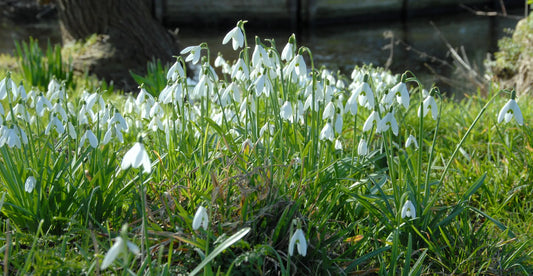
Galanthus nivalis is a strategic choice for professionals seeking early flowering and lasting landscape integration. Its exceptional ability to naturalize makes it an ideal plant for creating vast flower carpets under deciduous trees or light-leaved shrubs, where it benefits from optimal light in winter and early spring before the woody vegetation resumes. It integrates perfectly into flowerbeds, being able to be planted in dense groups (10 to 50 bulbs per m²) for a striking visual effect, or to highlight borders and structure the foreground of flowerbeds, with a moderate height varying from 10 to 30 cm .
For communities and managers of large public spaces, the snowdrop represents a major asset thanks to its low maintenance requirements and its early flowering which brings significant landscape interest at a time of year when few plants flower. Its great hardiness, tolerating temperatures below -15°C , guarantees its persistence and its capacity to form extensive carpets, even in transition zones between lawns and deciduous hedges. Ecologically, it plays a vital role as an early source of honey for domestic bees and bumblebees (especially queens), from February-March, thus contributing to local biodiversity.
Although its stems are short (about 10 cm ) and its vase life is limited ( 3 to 5 days ), Galanthus nivalis can be used as a cut flower for delicate miniature arrangements, enhancing its light and subtle fragrance. Finally, its cultivation in pots or under cover is also possible for propagation, the conservation of precious cultivars or the production of floral "early" crops, thus offering commercial flexibility.
Technical planting protocol and cultivation calendar
Successful planting of Galanthus nivalis depends on compliance with certain technical conditions.
Timing and depth of implementation
Galanthus bulbs are best planted in the autumn , ideally from September to November , just after purchase and before the ground freezes. Late planting is possible in early December if the ground is not yet frozen, but rapid action is recommended as the bulbs do not keep well out of the ground. The soil temperature at the time of planting should be below 15°C but above 2-4°C to allow for optimal rooting.
Regarding depth, it is generally recommended to plant bulbs 5-10 cm deep , with specifications varying slightly between 5-8 cm, 8 cm, 8-10 cm or 5-6 cm depending on the source, but the common rule of 2 to 3 times the height of the bulb remains a good practice. Spacing between each bulb should be between 5 and 15 cm for optimal development and adequate visual density. For intensive professional production, a density of 150-200 bulbs/m² can be considered with a spacing of 5-7 cm. It is crucial to position the bulb point upwards and to water thoroughly after planting to ensure good contact with the soil.
Soil requirements and exposure
Galanthus nivalis thrives in organically rich soils of loamy, sandy, or sandy loam texture. It can adapt to light clay and chalky soils, provided drainage is excellent. An optimal pH is between 5.5 and 7.5 , ideally between 6.0 and 7.0. Drainage is essential to prevent rotting of the bulbs, which are very sensitive to overwatering. The soil should be kept fresh and slightly moist during the growing season, but never saturated. Incorporation of mature compost, potting soil, or coarse sand is recommended to improve the porosity of heavy soils.
The optimal light exposure is partial shade , particularly under deciduous trees where it benefits from winter light and protective shade in summer. Although Galanthus can tolerate full sun if the soil remains cool and does not dry out, partial shade remains the safest option for professional cultivation, limiting the risk of water stress and ensuring optimal growth.
Water management and nutritional program
Galanthus require evenly moist soil during their growth (fall to spring), but are very sensitive to overwatering. In the open ground, natural rainfall is generally sufficient. In summer, during dormancy, watering should be significantly reduced to prevent bulb rot. When growing in pots, regular watering is necessary to keep the substrate slightly moist, without stagnation.
Fertilization needs are moderate. Excess nitrogen promotes foliage at the expense of flowering. Applying a balanced, slow-release fertilizer (NPK 10-10-10) at a rate of 30 to 40 g/m² in early spring, during the restart of vegetation, is sufficient. No fertilization is necessary in summer or during dormancy.
Crop management and technical adaptations
Galanthus is a low-maintenance plant. Regular hand weeding (every 3 to 5 weeks from January to May) is recommended to avoid competition from weeds. It is imperative to allow the foliage to yellow and dry out naturally after flowering (March-April) before removing it, as it is during this period that the bulb replenishes its reserves for the following year. Removing faded flowers is not essential but can optimize the vigor of the bulbs by preventing seed formation.
An organic mulch 5 to 8 cm thick (dead leaves, BRF, compost) is recommended in summer to keep the soil cool and limit evaporation. In winter, no specific protection is necessary in France thanks to its exceptional hardiness (down to -20°C to -37°C) . The main risk lies in excess humidity, which can be prevented by excellent drainage.
In case of prolonged drought, controlled drip irrigation and soil amendment with organic matter or the addition of mulch are essential. For very harsh winters, a planting depth of 8-10 cm and mulch protection can be beneficial, although its natural hardiness is very high. Forcing in a greenhouse or indoors is possible for early flowering, but considerably depletes the bulbs, which generally will not flower again the following year.
Botanical and morphological characteristics
Galanthus nivalis is a fascinating plant, rich in botanical and horticultural characteristics.
Classification and general characteristics
The full scientific name of the snowdrop is Galanthus nivalis L. , belonging to the Amaryllidaceae family . It is a bulbous perennial herb, representing the genus Galanthus which includes about 20 species . At maturity, it reaches a height of 7 to 25 cm , forming a low herbaceous clump with a generally erect habit, with upright flower stems bearing solitary drooping flowers. The flowering period extends from January to April in northern temperate zones, often as early as February in France, and generally lasts from 4 to 8 weeks .
Geographical origin and natural habitat
Galanthus nivalis is native to a wide European area, from the Pyrenees in the west to Ukraine in the east , covering countries such as France, Germany, Italy, and the Balkans. It is typical of temperate climates, preferring cool winters and moderate to humid summers with regular rainfall. It is found from the plains up to about 1600 meters above sea level , mainly in the cool, moist undergrowth of hilly to montane areas. Its preferred habitat includes the edges of deciduous forests, shady stream banks, and wet meadows.
Morphology of the bulb and leaf system
Galanthus is a tunicate bulb plant, meaning it is composed of concentric layers protected by a covering. Although precise dimensions are not always detailed, a healthy bulb is usually between 2 and 3 cm in diameter . Each bulb typically produces two to three basal leaves , linear or narrowly lanceolate, grayish-green to dark green, measuring between 10 and 25 cm in height and 0.5 to 1 cm in width . These leaves emerge in late winter, persist after flowering to replenish the bulb's reserves, then turn yellow and dry out in late spring, marking the entry into summer dormancy.
Floral structure
The flower of Galanthus nivalis is solitary, pendulous, and bell-shaped , measuring about 2 cm in diameter . It is composed of six white tepals arranged in two circles: the three outer segments are larger and convex, while the inner segments are marked with a green or greenish-yellow pattern in a V or U shape. The standard snowdrop has "applanate" vernation (flat emerging leaves), a distinctive technical characteristic. The flowers are lightly scented, giving off a subtle honey scent.
Biological cycle and longevity
Galanthus is a perennial, geophytic (underground bulb) plant. Its annual life cycle is relatively short, lasting about five months of vegetative and floral activity , centered on late winter and early spring. It spends most of the year in summer dormancy, as a bulb buried 12 to 15 cm deep . Its longevity is remarkable: a bulb can live and flower in the same location for several decades, with a well-established clump surviving and multiplying naturally for 30 to 50 years , or even longer, under favorable conditions.
Multiplication methods
Galanthus is best propagated by bulb division , with each bulb producing approximately 1 to 3 new bulbs per year , allowing for exponential growth. Division is optimal "in the green" (in vegetation) after flowering but before the foliage has completely yellowed. For large-scale commercial production, micropropagation offers very high multiplication rates, with a single G. elwesii bulb theoretically generating up to 27,000 propagules per year in the laboratory. Sowing is possible but less efficient for commercial production due to random emergence and longer development time.
Available varieties and cultivars
There are over 500 documented Galanthus cultivars , offering a wide variety of shapes and sizes. The main species include Galanthus nivalis (4–10 cm tall, dark green leaves), Galanthus elwesii (up to 25 cm, broader leaves and flowers with green markings at the tips and bases of the tepals), and Galanthus woronowii (glossy green foliage). Notable cultivars include 'Magnet' (long stems and flowers that turn in the breeze), 'S. Arnott' (more spreading tepals), 'Green Tips' (green at the tips of the outer tepals), 'Flore Pleno' (double flowers), and 'Wendy's Gold' (yellow markings and ovaries).
Hardiness and vernalization requirements
Galanthus nivalis is very hardy, classified in USDA zones 3a to 9b , which means it can withstand minimum temperatures down to about -34°C to -37°C . This high adaptability to cold makes it perfectly suited to most French regions, even those subject to severe frosts.
Vernalization , or a cold period, is a mandatory physiological requirement to induce flowering in Galanthus. Ideally, bulbs require 8 to 10 weeks of continuous cold at a temperature between 5°C and 8°C for optimal flower induction. Failure to provide this cold period or storing bulbs above 15°C will severely compromise, or even prevent, flowering.
Toxicity and pollinators
Galanthus nivalis, like other plants in the Amaryllidaceae family, contains potentially toxic alkaloids , although this is not explicitly detailed in all sources provided. Caution should therefore be exercised when handling the bulbs, which are considered highly toxic .
During the flowering period (February to March), Galanthus are mainly pollinated by honeybees (Apis mellifera) and bumblebees (Bombus spp.) , which are active from the first winter thaws. The floral morphology (green markings on the inner tepals) and the orientation of the flowers help to attract and guide these pollinators.
Commercial production and phytosanitary management
Planting density and quality assessment
In professional cultivation, the recommended planting density is about 9 bulbs per square meter , with a spacing of 5 to 8 cm . Galanthus is prolific and naturalizes easily, tending to quickly form mats of flowers. A healthy bulb should be firm to the touch , free of mold, white or creamy-white in color, and ideally between 2 and 3 cm in diameter . Premature yellowing of the foliage, pale mottling or brown tips may indicate nutrient deficiencies (nitrogen, magnesium, potassium) or environmental stress (high temperature, water stress).
Pathologies and bioaggressors
Galanthus are generally disease and pest resistant , making them relatively easy to grow. The main problem is bulb rot , caused by fungi in overly wet, poorly drained soil. Preventative measures include excellent soil drainage (pH 6.0-7.0), planting at adequate depth and spacing, and avoiding overwatering during dormancy. If an infection occurs, it is crucial to remove and destroy affected bulbs to limit spread.
Harvesting and preserving bulbs
Bulbs are harvested after flowering, in April , when the foliage begins to turn yellow but is still green. The bulbs must be carefully dug up, cleaned of soil and withered parts, and then sorted to keep only firm and healthy specimens. Storage should be in a dry, cool environment (15-20°C) , with a relative humidity of 40-50% , and good ventilation, ideally in openwork crates, from harvest (April) until the optimal planting period (September-November).
Crop rotation and renewal
Although Galanthus is perennial, crop rotation is recommended in commercial production. It is advisable not to replant Galanthus on a plot that has already hosted these bulbs (or other Amaryllidaceae such as daffodils) for at least 3 years . Ideal rotations include legumes or green manures to enrich and improve soil structure. To maintain vigor and flowering, division of clumps is recommended every 3 to 4 years , preferably at or just after full bloom, when the foliage is still green. Bulb size directly influences vigor and flowering abundance, with larger bulbs producing more robust and floriferous plants.
To summarize: Our Galanthus nivalis bulbs
The Galanthus nivalis bulbs offered by Floriverse meet the expectations of demanding professionals in ornamental plants. This winter-flowering snowdrop is perfectly suited to extensive landscaping, in beds, undergrowth or borders, thanks to its great hardiness and low maintenance requirements. Galanthus nivalis flowers from February and reaches 10 to 25 cm in height, with a remarkable longevity in place. As a specialist wholesale supplier of Galanthus nivalis bulbs , we guarantee you healthy material, calibrated between 2 and 3 cm, ready to be planted upon receipt. For any project, whether for floriculture or landscaping, it is wise to buy Galanthus nivalis bulbs from controlled professional channels. Our catalog also includes packaging adapted to high volumes for autumn planting campaigns. By choosing Floriverse , you are placing your trust in a specialist wholesale supplier of Galanthus nivalis bulbs that combines technical rigor, responsive service, and varietal diversity. You can purchase Galanthus nivalis bulbs with complete peace of mind, with personalized support. Finally, our long-term commitment as a specialist wholesale supplier of Galanthus nivalis bulbs is also based on our ability to offer batches adapted to horticultural requirements, whether for public or private projects. Buying Galanthus nivalis bulbs from our teams guarantees a good start to your winter plantings and a lasting floral impact.