Quick read / the essentials about our Tulip Bulbs
Tulips are undoubtedly the queens of spring. Cultivated for centuries, they offer an exceptional diversity in terms of shapes, colors, earliness and height, which makes them an essential plant for French floriculturists. At Floriverse , a specialist wholesale supplier of Flower Bulbs , we rigorously select Tulip bulbs intended for professional production. From size 10/11 to higher sizes (12/+), each batch is checked to guarantee uniformity, abundant flowering and vigor in cultivation.
Buying Tulip Bulbs from Floriverse means choosing a wide range of horticultural products tailored to the needs of your garden: early tulips (Fosteriana, Greigii), mid-season (Triumph), or late (Single Late, French Tulip), covering a flowering period from March to May. The color palette is unlimited: deep red, pure white, luminous yellow, bicolor, flamed or fringed shades. Each bulb is a powerhouse of performance, designed for cut flowers or landscaping.
Our role as a specialist wholesale supplier of flower bulbs doesn't stop at supply. We support each customer with precise technical advice: density (up to 100 bulbs/m²), depth (15 to 20 cm depending on size), essential drainage, choice of substrate, and fertilization program. Tulips require light, well-drained, slightly acidic to neutral soil and full sun exposure to express their full potential.
With Floriverse, buying tulip bulbs becomes a reliable, cost-effective, and consistent process. Our logistics guarantee punctual deliveries, our inventory is adapted to French growing cycles, and our expertise is based on years of collaboration with local producers. As a specialist wholesale supplier of flower bulbs , we are committed to supporting you for a successful flower season.
Botanical characteristics and production morphology
The tulip, whose full scientific name for cultivated varieties is Tulipa gesneriana L. , belongs to the botanical family Liliaceae. It is a geophytic perennial plant, characterized by the presence of an underground bulb allowing it to spend the bad season in dormancy. This bulb, with a tunic, is protected by a thin, brownish outer envelope. For professional use, standard sizes are generally between 10/11 cm and 12/14 cm in circumference , or a diameter of approximately 3 to 5 cm, with larger bulbs (12/+) being preferred for robust flowering . The bulb is ovoid to subglobose in shape, slightly flattened at the base, with white fleshy scales inside.
The foliage, arranged alternately on the stem, is composed of entire leaves with a fleshy texture. The base of the thickened leaves in the bulb serves as a nutrient reserve. After emerging from the soil, the central scales develop into chlorophyll leaves, essential for photosynthesis to replenish reserves after flowering.
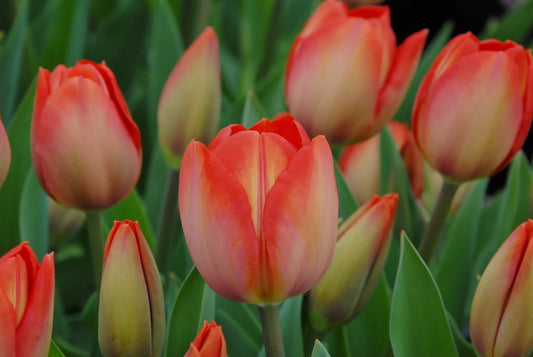
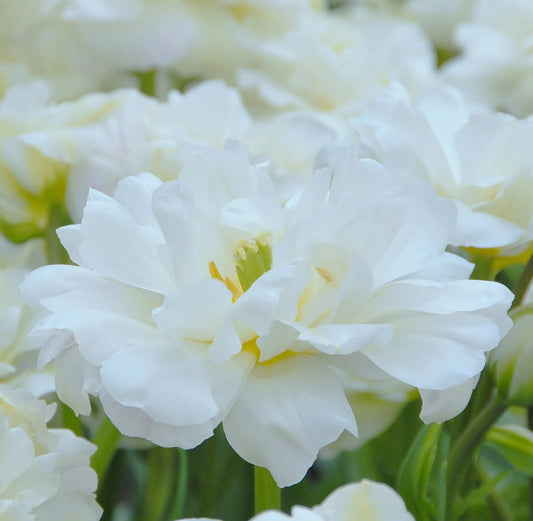
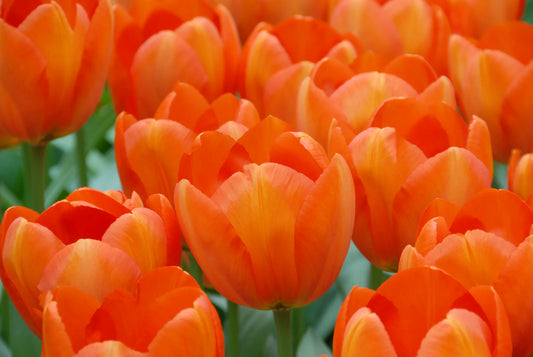
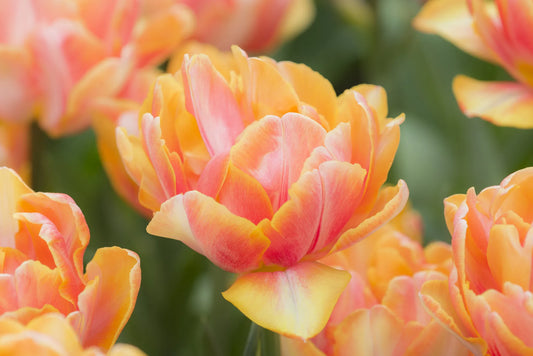
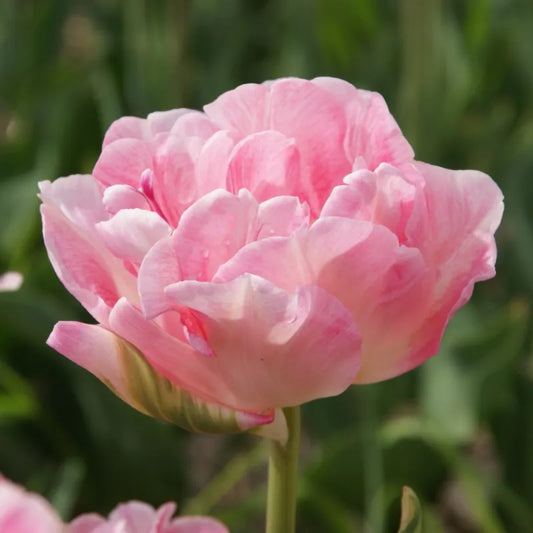
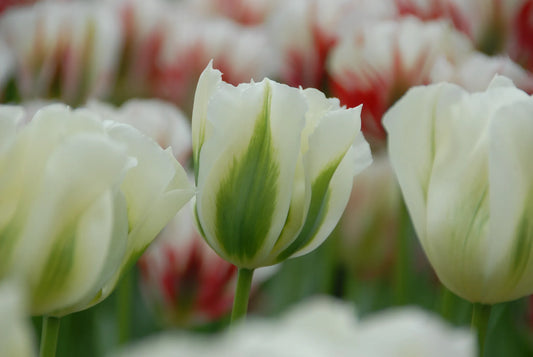
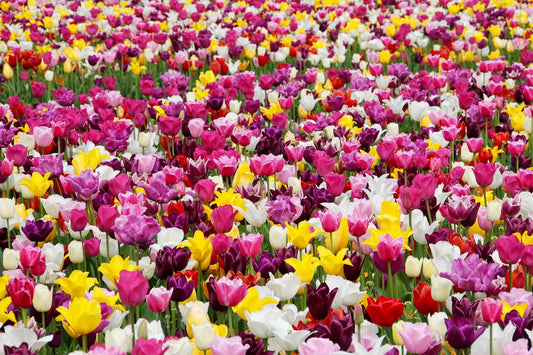
The tulip flower is generally cup-shaped or goblet-shaped, consisting of six tepals (similar petals and sepals). The flowers can be single, with a single row of tepals, or double, with several overlapping rows, depending on the variety. Their diameter is typically between 5 and 10 cm , but can be larger for giant varieties. While the majority of tulips bear only one flower per stem, some cultivars can have several. One of the major assets of tulips is their exceptional color palette, covering almost all shades: red, yellow, orange, pink, purple, white, as well as bicolor, multicolored, flamed or fringed varieties. The fragrance is generally light or absent, although a few botanical varieties can give off a subtle fragrance.
The height of mature tulips varies considerably depending on the division and variety, ranging from 10 to 75 cm. For example, Single Early tulips reach 18-20 cm, Triumph 36-61 cm, Darwin hybrids 50-70 cm, Single Late 45-75 cm, or giant 'French Tulip' tulips up to 60-90 cm. The growth habit is generally upright.
For professionals, the visual appeal lies in this immense diversity of shapes, sizes, and colors, offering great flexibility for landscaping, cut flower production, and floral arrangements. The initial rigidity of the stem and the fresh appearance of the flower contribute to its appeal.
Varietal classification and production groups
The most commonly cultivated tulip for commercial production, Tulipa gesneriana, also known as the "florist's tulip" , comprises over a thousand varieties resulting from centuries of hybridization. There are over 4,000 species and cultivars, divided into technical groups based on their floral characteristics, height, and earliness.
In France, particularly in regions such as the Var, giant tulips, a local specialty, are cultivated alongside a wide range of international horticultural cultivars.
The main horticultural groups cultivated for the professional market are distinguished by the shape of their flowers (single or double, Parrot, Fleur-de-lis), their almost unlimited range of colors, their variable height (from 20 cm for dwarf botanicals to 90 cm for giants), and above all their precocity.
Precocity criteria for production planning
Precocity is a crucial criterion for production planning :
- Early tulips bloom from late March to early April (e.g. Fosteriana, Greigii).
- Mid-season varieties flower in mid-April (e.g. Triumph).
- Late tulips bloom from late April to May (e.g. Single Late, Double Late, 'French Tulip').
Among the cultivars appreciated by professionals are 'Ile de France' (Triumph, bright dark red, 45-50 cm, mid-season), 'Mrs. John T. Scheepers' (Single Late, bright yellow, 60-80 cm, late), the 'French Tulip' (mutations of Single Late, large, varied, 60-90 cm, late), 'Queen of Night' (Single Late, very dark purple, 60-70 cm, late), 'Purissima' (Fosteriana, pure white, 35-40 cm, early), or 'Carnaval de Nice' (Double Late, white & red, 40-55 cm, late). The giant tulips of Carqueiranne are known for their exceptional dimensions (stems of 60 to 90 cm) and their very large flowers , particularly prized on the bouquet market.
The choice of cultivars and their combination based on precocity allows professionals to stagger production and cover a wide marketing period.
Planting calendar and technical parameters for establishment
Successful tulip growing for professionals depends largely on adhering to the planting schedule and the correct planting depth. The ideal time to plant tulip bulbs in France is in the fall, from late September to mid-November.
Calendar based on soil temperature
This precise schedule depends on the soil temperature:
- In regions with harsh winters, early planting (late September to early October) is recommended.
- For most of France, the optimal period runs from mid-October to mid-November.
- In regions with milder climates, such as the south of France, planting can continue until November or even early December.
The optimal soil temperature for planting is around 10°C, ideally below 15°C. It is recommended to plant about six weeks before the first expected frost to allow for adequate root development. Good rooting in autumn, when temperatures are cool, is crucial for quality flowering in spring. Planting too late, after the first frost, significantly compromises this development.
Depth and spacing for professional production
Planting depth is another essential technical parameter. The general rule is to plant bulbs at a depth equivalent to three times their diameter. For a standard bulb of approximately 5 cm in diameter, this represents a depth of 15 cm. For larger bulbs (> 5 cm), 15 to 20 cm is recommended, and for smaller bulbs, 7 to 10 cm. This depth ensures good protection against drying out and frost, solid anchoring of the stem, and harmonious root development. In the case of late planting, a slightly greater depth can help protect the bulbs from frost.
The spacing between bulbs is also important, usually equivalent to three times their diameter, or about 15 cm for a standard bulb. For mass production or in dense groups, a spacing of 10 to 15 cm in all directions is commonly used. In professional production, a density of 60 to 100 bulbs per m² is standard , although this can vary depending on the type of cultivation (open field or under cover) and the size of the bulbs.
Cultural requirements and maintenance protocols
The tulip is a crop which, although relatively undemanding once established, requires specific growing conditions and regular maintenance to ensure quality production.
Soil and drainage specifications
The ideal soil for professional tulip cultivation is light, sandy or sandy loam. Very efficient drainage is absolutely essential. Tulips are extremely sensitive to excess moisture, which causes bulb rot. Heavy, clayey soils should be amended with 20 to 30% coarse sand or mature compost to improve structure and drainage. The optimal pH is between 6 and 7 (slightly acidic to neutral) , but tulips also tolerate slightly calcareous soils, provided drainage is perfect.
Light exposure and protection
A sunny exposure is optimal for tulips , promoting vigorous growth and abundant flowering. Light shade can be tolerated, but complete shade should be avoided. In full sun, protection from strong winds may be necessary to preserve the integrity of the flower stems.
Professional water management
Watering must be carefully managed throughout the cycle. An initial watering is required just after planting in autumn to stimulate rooting. During spring growth, a moderate but regular supply is necessary, particularly in dry periods (approximately 10-15 mm/week on free-draining substrate) . Maintain constant but not waterlogged moisture during flowering. Gradually reduce watering after flowering and suspend it completely during summer dormancy, as excess water at this time reduces the capacity for future reflowering and promotes rot.
Fertilization program
Good soil preparation includes incorporating compost into the top 20-30 cm. At planting, a fertilizer rich in phosphorus (P) and potassium (K) (e.g. NPK 5-10-5 or 6-10-6 at 30-40g/m²) is recommended for root development , avoiding excess nitrogen (N). In early spring, when vegetation resumes, a balanced fertilizer application (40 to 60g/m² of a suitable NPK) is beneficial. A moderate application of potassium after flowering helps strengthen the bulb.
Routine professional maintenance
-
Weeding : Essential and regular (every 15 to 20 days in spring) to limit competition. Favor manual or mechanical methods.
-
Removing faded flowers (Pruning) : Always cut off flowers as soon as they fade to prevent seed formation, which exhausts the bulb. Cut just below the flower.
-
Foliage conservation : It is essential to leave the foliage in place until it has completely and naturally yellowed (approximately 6 to 8 weeks after flowering, generally until July). It is during this period that the bulb replenishes its reserves for the following year.
-
Seasonal protection : In regions with harsh winters, a layer of organic mulch (5-10 cm) protects the bulbs from frost. A wintering fleece (P30-P60) can be used in cases of extreme cold.
-
Bulb lifting : In intensive production, bulbs are generally pulled in June-July after the foliage has completely dried. They are cleaned, sorted, calibrated and stored in a dry place at 18-20°C for their summer rest. This systematic lifting ensures the sanitary quality and size of the bulbs for replanting.
Floral programming and production cycle management
The tulip is an iconic spring plant, blooming primarily from March to May in France. This period sometimes extends into early June for the latest varieties.
Factors of variation in flowering
The exact flowering time varies depending on several factors:
-
Geographic region : In the south of France, where the climate is milder, flowering can begin as early as early March. In cooler regions, it occurs later, usually in April or May.
-
Cultivated variety : The different horticultural divisions are classified according to their earliness. Early tulips bloom in March, mid-season tulips in April, and late tulips in May. This diversity allows for flowering to be spread over approximately three months.
Although the flowering period of an individual bulb is relatively short, the strategic use of an assortment of varieties of different earliness allows professionals to cover the entire spring season , or even extend it. For example, early botanical tulips bloom from February-March, followed by early single tulips and daffodils in early April, then more elaborate varieties (double, Parrot, lily-flowered, etc.) from mid-April.
Forcing techniques under cover
In professional production, forcing under cover is a common technique for obtaining off-season blooms , allowing tulips to be offered from January, subject to suitable heat treatment of the bulbs and strict compliance with the cooling cycle (vernalization at 5°C).
Use in landscaping and plant associations
The tulip offers remarkable versatility for integration into professional landscaping. Thanks to its diverse shapes, sizes, and colors, it can create varied and impactful scenes.
Applications in professional planning
-
Beds : Tulips are ideal for flower beds, planted in dense groups (recommended spacing of 15 to 20 cm) for maximum visual impact and to facilitate drainage.
-
Borders : Smaller, more resilient botanical tulips are particularly suitable for dividing spaces and adding a distinct touch of color. The recommended planting depth is 10-15 cm.
-
Rock gardens : Some botanical species, often early and small, such as certain squills (which flower in March, 10-15 cm high), fit perfectly into rock gardens to create delicate scenes.
Capacity for naturalization and sustainability
The naturalization capacity of tulips varies according to the variety. Botanical species are known for their excellent resilience and their ability to naturalize , that is, to propagate and rebloom year after year without major intervention. Some hybrids, notably Darwin or varieties included in the "perennial" ranges, also have a better capacity to rebloom over several years. To promote naturalization, it is essential to enrich the soil with phosphorus, ensure optimal drainage, plant at a good depth (about three times the height of the bulb) and systematically remove faded flowers so that the plant concentrates its energy on the bulb. Maintaining the foliage after flowering is also crucial.
Technical plant associations
Tulips combine very well with other plants for complementary aesthetic or cultural effects.
- With other early bulbs such as crocuses (synchronized with botanical tulips), miniature irises (in rock gardens) or daffodils (with early single tulips at the beginning of April).
- With seasonal plants such as pansies and horned violets in borders or beds.
- With perennials or ground cover roses to create an evergreen base.
- Peonies combine harmoniously with double-flowered tulips such as Murillo.
The diversity of tulip species and varieties makes it possible to plan associations over several months, by combining plants whose flowering periods overlap or follow one another.
Geographic origin and ecological adaptation
The tulip (Tulipa spp.) is native mainly to Central Asia , with its homeland identified in the steppes and mountainous areas of countries such as Kazakhstan, Uzbekistan, Kyrgyzstan, Tajikistan, northeastern Iran, and Afghanistan. It is in these regions that the greatest natural diversity of wild species is observed.
Natural habitat and original conditions
The tulip's natural habitat is characterized by a continental climate: cold winters (often with snow), hot, dry summers, significant seasonal temperature variation, and periods of summer drought during which the tulips go dormant. Wild tulips thrive primarily at altitudes between 500 and 1,500 meters , although some species can be found in the lowlands, but the majority are concentrated in the lower and middle levels of the mountains. They are adapted to dry steppes, rocky slopes, subalpine meadows, and open grasslands, preferring well-drained, often stony or gravelly soils with little plant competition. This original ecological profile explains the tulip's hardiness, its imperative need for well-drained soils, and the importance of a dry summer period to prevent bulb rot.
Historically, the tulip is strongly associated with the Netherlands, which is now the world's leading producer, supplying over 80% of the production. This association, although the tulip is not native to Holland, evokes the image of a great specialty of this country.
Contribution to cultivated biodiversity
Although tulips are often grown for their visual appeal, they also play a role in biodiversity, particularly when it comes to pollinators.
Tulips, due to their entomogamous pollination method, attract various pollinating insects. They are notably visited by honeybees (Apis mellifera), bumblebees (Bombus spp.), and to a lesser extent by certain butterflies and beetles. Their main attraction lies in pollen production, with nectar production being less important than in other horticultural species.
The tulip flowering period in France, mainly from April to May, coincides with a period when floral resources may still be limited, particularly after the end of winter. Tulips thus constitute an early source of food (pollen) for the first generations of pollinating insects , contributing to their support and to local biodiversity, particularly in agricultural or diversified landscaped areas.
To maximize pollinator appeal, it is technically recommended to favor single-flowered varieties. Double or triple flowers tend to produce less pollen and nectar that is less accessible to insects.
It is important to note, however, that intensive tulip cultivation for large-scale bulb production can lead to significant environmental pressures. In some regions, such as South Finistère in Brittany, bulb flower crops cover hundreds of hectares and require the year-round use of herbicides, fungicides, and insecticides, the residues of which end up in the environment, particularly the ocean. This reality underscores the growing importance of alternative and organic approaches in floriculture, such as those promoted by associations such as "Fermes Florales Bio."
Advanced technical aspects for experienced professionals
Beyond the fundamental aspects, several other technical points are essential for professionals handling tulip bulbs.
Toxicity and health precautions
It is important to know that all parts of the tulip are considered toxic, especially the bulb , due to the presence of tulipalin A and B, allergenic compounds. Ingestion can cause digestive problems in humans and livestock. For professionals who regularly handle the bulbs, contact can cause contact dermatitis called "tulip fingers" . It is estimated that 10 to 20% of people exposed continuously can develop this allergy. Wearing gloves is therefore recommended.
Life cycle and longevity in production
The tulip is botanically a perennial plant, but in professional cultivation, particularly for cut flowers, it is often considered an ephemeral perennial or annual. Flowering is most spectacular in the first year, then the vigor and size of the flowers decline rapidly. To ensure consistent quality, it is common in production to pull and renew the bulbs each year after flowering. Under ideal conditions, some botanical tulips can rebloom for 3 to 5 years, or even 10 years, but most commercial hybrids only maintain optimal flowering for one year.
Professional propagation methods
Tulips propagate naturally by bulbils (about 3 new bulbs per year per mother bulb). Professionals use faster methods such as "chipping" (cutting the bulb) or "scoring" (cutting) . Advanced techniques such as in vitro tissue culture or micropropagation with TDZ allow for very large-scale propagation (several thousand bulbs per year from a single one, or 500 to 2000 microbulbs per healthy plant) and the production of healthy, virus-free plant material. Dividing the cloves (small bulbs) is also a common method.
Efficiency and economic performance
In professional cultivation, a technical yield of approximately 1 commercial-quality flowering stem per bulb planted per cycle can be expected. With a standard density of 60 to 100 bulbs per m², this represents a yield of 60 to 100 flowering stems per m². The quality of the bulbs (size 11/12 and above) and the mastery of cultural practices influence this yield.
Advanced forcing techniques
Tulips are ideally suited to forcing, an essential technique for producing off-season cut flowers. This process requires a prolonged cooling (vernalization) period (15 to 16 weeks for late varieties) at low temperatures (around 5-9°C) to simulate winter, followed by an increase in temperature and light to trigger flowering. Careful management of watering and humidity is crucial under cover.
Health diagnosis and phytosanitary monitoring
Monitoring tulip health involves visual observation and knowledge of physiological parameters. Signs of stress or deficiency include yellowing (nitrogen or potassium deficiency, poor drainage), ridged leaves (virus), soft or moldy bulbs (rot due to excess moisture) , short or deformed stems, and discolored or aborted flowers (lack of cold, P or K deficiency, insufficient light). The main pests and diseases are bulb mites and nematodes, fungal rots (Botrytis, Fusarium), and viruses (Potyvirus). Prevention is based on crop rotation (avoid Liliaceae for 3 to 5 years), selection of healthy bulbs, sufficient spacing, perfect drainage, and regular monitoring. In the event of a nematode attack, uprooting and destroying the plants is often the only solution.
Renewal of plantations and influence of caliber
To maintain the vigor and quality of flowering in perennial crops or to multiply plants, dividing or renewing the plantations is recommended every 3 to 5 years. This operation is carried out in the fall when the foliage is dry. The size of the bulb has a major influence on vigor and flowering. A large bulb (>12 cm) guarantees the best vigor and abundant flowering from the first year , producing robust stems and large flowers. Smaller sizes (<10 cm) take longer to reach their full potential.
To summarize: Our Tulip Bulbs
Choosing tulips means choosing a versatile and high-performance species that can fit into any growing system. At Floriverse , a specialist wholesale supplier of flower bulbs , we offer bulbs that meet the technical requirements of professionals: rigorous selection of sizes, health monitoring, agronomic advice and planning assistance. Whether for cut flowers or flower beds, the bulbs we supply are ready to meet the demands of the field.
Buying tulip bulbs from our company means enjoying a comprehensive range: botanical tulips, Triumph, Double, Perroquet, lily-flowered, etc. Each varietal group offers specific advantages, from earliness to vase life. Thanks to rigorous selection, our bulbs ensure optimal yield, uniform flowering, and longevity of production according to planned cycles.
As a specialist wholesale supplier of Flower Bulbs , Floriverse also guarantees maintenance advice: regular weeding, moderate irrigation, removal of faded flowers and preservation of foliage until it has completely yellowed for good replenishment of reserves. Lifting and storage at the end of the cycle optimizes the performance of the bulbs over the long term.
Buying tulip bulbs from Floriverse means ensuring professional support every step of the way: planting, growing, flowering, and post-harvest. It also means choosing a specialist flower bulb wholesaler who understands your needs and is committed to the success of your season. We make every effort to ensure your tulips meet your expectations: consistent, resilient, and visually irresistible.