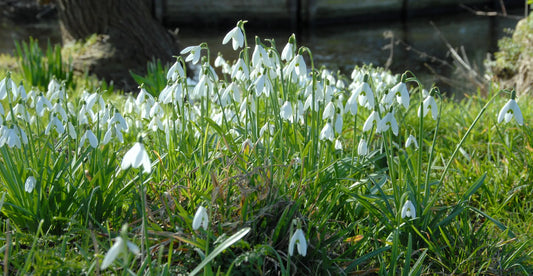
Order your professional Galanthus bulbs
Bulbiverse, a specialist wholesale supplier of Galanthus bulbs , offers you a rigorously selected range to meet the requirements of plant professionals. Buying your Galanthus bulbs means benefiting from a direct supply from nurseries, with homogeneous, healthy and ready-to-use batches. Our products are grown under strict health control and offer varietal resistance , high yield , and disease tolerance . Our producer prices and decreasing prices allow you to optimize your margins while guaranteeing quality. Fast and careful delivery throughout France . Also benefit from dedicated technical support and personalized advice according to your development or production objectives. Order now or request your free quote from our responsive sales department.
Technical guide to the production of Galanthus nivalis
The full scientific name of the snowdrop is Galanthus nivalis L. , a plant belonging to the prestigious Amaryllidaceae family. This genus includes about 20 species of bulbous perennial herbaceous plants.
Galanthus nivalis is characterized by a modest height, generally between 7 and 15 cm , reaching 25 cm at maturity for certain cultivars or in optimal conditions. Its habit is mainly erect, forming a low herbaceous clump from which rise upright flower stems, bearing a solitary, hanging, bell-shaped flower.
The flowers are composed of six white tepals (segments) arranged in two circles. The three outer segments are larger and convex, while the three inner segments are smaller and often marked with a green or greenish-yellow V- or U-shaped pattern. Six long, pointed anthers, 3 to 5 mm long, open through pores or short slits. The flowers are pure milky white for the outer tepals, while the inner tepals often have green spots.
The foliage is also distinctive. Each bulb typically produces two to three basal leaves , linear or narrowly lanceolate, grayish-green to dark green in color. These leaves are 10–15 cm long and about 0.5–1 cm wide at maturity, and persist for several weeks after flowering, actively participating in the replenishment of the bulb's reserves.
Native to a wide area of Europe, Galanthus nivalis extends from the Pyrenees to Ukraine and the Balkans. It is typical of temperate climates, preferring cool winters and moderate to humid summers with regular rainfall. Its natural habitat is from the plains up to about 1600 meters above sea level , mainly in the moist and cool undergrowth of hilly to montane areas. It also thrives on the edges of deciduous forests, on shady stream banks, and in damp meadows, adapting to acid or alkaline soils, provided they are fresh and well-drained.
Varietal range and horticultural selection
The genus Galanthus is surprisingly rich, with over 500 documented cultivars , offering professionals a wide range of specimens suitable for various applications.
Main species and technical characteristics
-
Galanthus nivalis : The most common species, measuring 4 to 10 cm, with two to three dark green, strap-shaped leaves. It comes in single and double varieties.
-
Galanthus elwesii : Larger, reaching up to 25 cm, it is distinguished by wider leaves that curl around each other and longer tepals than G. nivalis, with green tips and bases. It tolerates drought and full sun better in northern regions.
-
Galanthus plicatus : Particularly used for hybridizations, its foliage is very distinctive.
-
Galanthus woronowii : Stands out with its bright, glossy green leaves, contrasting with other species such as G. ikariae which has matte green leaves, sometimes tinged with gray.
Reference cultivars for production
-
'Magnet' : Characterized by long stems allowing the flowers to dance in the breeze.
-
'S. Arnott' : Valued for its more spread-out tepals.
-
'Green Tips' : Recognizable by the presence of green markings at the end of the outer tepals.
-
'Flore Pleno' (Galanthus nivalis f. pleniflorus): An extremely common double-flowered variety, offering a high visual impact and an extended flowering season. Its height is around 15 cm.
-
'Wendy's Gold' : Distinguished by yellow markings and ovaries, instead of the usual green. Forms with yellow markings are highly sought after by collectors, although this coloration can sometimes be due to mineral deficiency or lack of light.
Galanthophiles attach great importance to the subtle differences in size, shape and floral markings between these varieties.
Planting and establishment protocol
To ensure optimal recovery and abundant flowering of Galanthus, the planting schedule and technique are crucial.
Galanthus bulbs should be planted in the fall, ideally from September to November , just after purchase and before the ground freezes. Late planting is possible, as late as early December if the winter is mild, as long as the ground is not frozen, but it is best to act quickly as the bulbs do not keep well out of the ground. The soil temperature should be cool, preferably between 2°C and 15°C .
Technical parameters of planting
-
Depth : Plant the bulbs between 5 and 10 cm deep, on average 8 cm, always with the tip of the bulb facing upwards. A good rule of thumb is to plant the bulb at a depth equivalent to 2 to 3 times its height.
-
Spacing : Leave a spacing of 5 to 15 cm between each bulb, depending on the desired density for visual effect. For optimal yield, a density of approximately 9 bulbs per m² is recommended.
After planting, abundant watering is recommended to encourage soil compaction and the start of rooting.
Cultivation conditions and technical itinerary
The success of professional Galanthus cultivation depends on mastery of growing conditions and maintenance adapted to its life cycle.
Substrate and drainage
Galanthus thrive in soils rich in organic matter, with a loamy or sandy texture. They can adapt to light clay and chalky soils, provided they are well-drained. The optimal pH is between 5.5 and 7.5 , covering slightly acidic, neutral, or even slightly basic soils. Ideally, a pH of 6 to 7 is recommended. Excellent drainage is essential to prevent bulb rot, the main risk associated with excess moisture. If the soil is heavy, incorporating mature compost, potting soil, or coarse sand is essential to improve porosity.
Light exposure management
The optimal light exposure is between full sun and partial shade, with partial shade being preferred. This exposure provides an ideal balance between sufficient light and protection against soil drying out, particularly in summer. Deciduous tree bases are an ideal location, reproducing their natural habitat in light undergrowth, where they benefit from winter light before the summer foliage.
Irrigation and Nutrition Program
Galanthus require evenly moist soil throughout their growing season (autumn to spring), but not excessively so as to avoid bulb rot. In open ground, rainfall is often sufficient. In summer, during dormancy, watering should be reduced. For professional cultivation, the ideal soil moisture level is between 60% and 75% of its storage capacity.
Fertilization needs are moderate. Excess nitrogen fertilizer can promote foliage at the expense of flowering. A balanced slow-release fertilizer (NPK 10-10-10) in early spring, during the restart of vegetation, is sufficient, at a rate of 30 to 40 g/m² . No application is necessary in summer or during dormancy.
Protection and mulching
Galanthus is very hardy (USDA zones 3a-9b, i.e. down to -37°C to -34°C) , and does not require specific winter protection in France. However, organic mulch (dead leaves, BRF, compost) 5 to 8 cm thick is recommended, mainly in summer, to keep the soil cool, limit evaporation and reduce weeds. In winter, it offers minimal protection, as the species is naturally adapted to frost.
Health monitoring and maintenance operations
Galanthus requires relatively little maintenance. Regular manual weeding (every 3 to 5 weeks from January to May) is recommended to avoid competition from weeds. Removing faded flowers is not essential but can be done to optimize bulb vigor by limiting nutrient depletion linked to seed formation. It is imperative to allow the foliage to yellow and dry out completely before removing it, as it is during this period that the bulb replenishes its reserves for the next flowering.
Lifting and dividing bulbs is recommended every 3 to 5 years to avoid excessive clump density, prevent flowering decline, and manage health risks. This operation is ideally carried out after the foliage has completely yellowed (late spring or early summer), when the bulbs are dormant, thus minimizing risks.
Prophylaxis and phytosanitary management
Galanthus is generally hardy and not prone to major diseases and pests. The main problem is bulb rot , caused by fungi in overly wet, poorly drained soil. Preventative measures include excellent drainage, a soil pH between 6.0 and 7.0, adequate bulb spacing (7-10 cm), and moderate watering, especially in summer. If rot occurs, affected bulbs should be removed immediately and destroyed to prevent spread. The daffodil fly can also be a bulb pest, requiring careful monitoring.
Vernalization: an essential process
Galanthus requires a cold period (vernalization) to induce optimal flowering. This phase, typically between 5°C and 8°C for 8 to 10 weeks , is crucial for the success of professional cultivation. Absence or insufficient cold period will result in weak, irregular, or even absent flowering.
Culture under protection
Growing in pots or under cover is perfectly feasible and offers greater control over growing conditions. A loamy, well-draining substrate, such as John Innes No. 3 , is recommended, combined with 50% perlite and coarse gravel for optimal aeration. Watering should be moderate, with the substrate remaining barely moist and never soggy, especially during summer dormancy. Breathable pots (terracotta, openwork baskets) 10 cm in diameter are recommended.
Quality indicators and diagnosis
A healthy Galanthus bulb is firm, mold-free, white or creamy-white in color, and 2 to 3 cm in diameter . Premature yellowing of leaves (before May-June) may signal a nitrogen deficiency, while pale mottling may indicate a magnesium deficiency. Brown or shriveled leaf tips may indicate a potassium deficiency or water stress. Delayed or absent flowering may be a sign of heat stress (temperature too high during dormancy). Short flower stems may also be an indicator of stress.
Production and flowering calendar
Galanthus nivalis is a very early flowering plant, typical of late winter and very early spring. Its flowering period generally extends from January to March in France, but the exact period can vary depending on latitude, altitude, and local climatic conditions. In southern regions, flowering can begin as early as January, while at higher altitudes, it can be delayed.
The average flowering time of the snowdrop is 4 to 8 weeks , a relatively short period but particularly appreciated for its appearance in the middle of winter, when few other plants are in flower.
Landscaping and development applications
Galanthus is a landscaping element of choice for professionals, thanks to its versatility and its ability to create striking visual effects.
Landscape integration strategies
Snowdrops are ideal for flowerbeds, particularly as carpets of flowers under deciduous trees or shrubs with light foliage, where they benefit from winter light. They are planted in dense groups (10 to 50 bulbs per square meter) for a white "cloud" effect, and fit perfectly into lawns, borders, and rockeries. Their moderate height (10-30 cm) makes them a prime plant for structuring flowerbeds. In light undergrowth, they establish themselves permanently, resisting the cold and winter humidity.
Capacity for naturalization
Galanthus is known for its exceptional ability to naturalize. Bulbs, left in place, multiply spontaneously by producing new bulbs and by seeds. In the absence of disturbance, an initial carpet of 50 bulbs/m² can double in size in 3 to 5 years, and a well-established colony can persist and multiply for 30 to 50 years , or even longer. Each bulb can produce 1 to 3 bulblets per year, capable of flowering in 2 to 3 years.
Interest in communities and large public spaces
The snowdrop is relevant for communities and large public spaces thanks to its hardiness (-15°C to -20°C) , its ease of naturalization and its minimal maintenance. It forms extensive carpets under deciduous trees, offering major landscape interest in late winter. It requires moderate and regular irrigation, but its maintenance is mainly limited to waiting for the foliage to completely yellow before cleaning it. Its melliferous flowers, with a light honey scent, also contribute to biodiversity by providing an early resource for pollinators.
Recommended plant associations
Galanthus pairs well with understory perennials and other early-flowering bulbs that share its ecological requirements (cool, humus-rich soil, partial shade). The best combinations include:
-
Hellebores (Helleborus) : Winter to spring flowering, height 30-60 cm.
-
Winter eranthus (Eranthis hyemalis) : Bright yellow flowers from January to March, 5-10 cm.
-
Cyclamen coum : Pink/purple flowers, decorative evergreen leaves.
-
Crocus sp.: Early flowering, 10-15 cm, varied colors.
-
Spring snowflake (Leucojum vernum) : White flowering, 15-20 cm, later.
-
Wood anemone (Anemone nemorosa) : Flowers from March to May, deciduous foliage covering the ground.
-
Common primrose (Primula vulgaris) : Flowers from February to April.
-
Deciduous trees and shrubs : Such as oaks, hornbeams, maples, hazelnuts, dogwoods, which allow winter light to pass through and provide summer shade.
For a dense and natural effect, it is recommended to plant 50 to 100 Galanthus bulbs per m² .
Post-flowering ornamental interest
After flowering, the ornamental interest of Galanthus lies in the persistence of its foliage. The leaves, linear or ribbon-like, waxy in texture, and glaucous green to bright green in color, remain decorative for 3 to 6 weeks , bringing a touch of freshness. The fruiting, although present, has no real ornamental interest.
Etymology and historical context
The term "Galanthus" comes from the ancient Greek "γάλα" (gála, "milk") and "ἄνθος" (ánthos, "flower"), referring to the milky white color of its flowers. The common name "snowdrop" evokes its remarkable ability to break through the snow cover to bloom at the first sign of winter mildew. Although sources do not detail specific symbolism, its early appearance makes it a universal symbol of hope, purity, and renewal after the harshness of winter.
Ecological contribution and biodiversity
Galanthus plays an important ecological role, particularly in late winter, where it is one of the few sources of nectar and pollen available to early pollinators.
-
Main pollinators : Galanthus nivalis is mainly pollinated by honeybees (Apis mellifera) and bumblebees (Bombus spp.), active from the first winter thaws.
-
Attractiveness factors : The green markings on the inner tepals of flowers play a visual and olfactory role in attracting and guiding insects. The downward-leaning morphology of the flowers protects the nectar and pollen, and their grouping in colonies increases their visibility and attractiveness.
-
Seed dispersal : The whitish seeds of the snowdrop have a small fleshy appendage called an elaiosome, rich in substances that attract ants. These contribute to seed dispersal, thus promoting the naturalization of the species.
Galanthus thus contributes to biodiversity by providing a crucial food resource for the first pollinating insects of the year, before the massive arrival of other spring blooms.
Additional technical aspects
Hardiness and climate tolerance
Galanthus nivalis is extremely hardy, able to withstand minimum temperatures of around -34°C to -37°C (USDA zones 3a/3b) , which makes it perfectly suited to almost all French regions. Its resilience to cold is a major asset for sustainable landscaping.
Life cycle and longevity in place
Galanthus is a perennial, geophytic plant that grows from an underground bulb. Its aerial cycle is short, about five months , from late winter to early summer. During the summer, the bulb goes dormant at a depth of 12 to 15 cm underground. A Galanthus bulb can live and flower in the same location for several decades (30 to 50 years, or even longer) if conditions are favorable.
Multiplication and commercial yield
The preferred and most effective propagation method for Galanthus is bulb division . Each bulb can produce 1 to 3 new bulbs per year, allowing for exponential growth of the clumps. To optimize yield, it is recommended to dig up the clumps after flowering ("in the green" period) and separate the mini-clumps of 4-5 bulbs, before replanting them with more space. Manual division is the most economical and practical method for medium-sized growers.
For large-scale production, micropropagation offers impressive yields, generating up to 27,000 propagules per year from a single G. elwesii bulb using laboratory techniques. For professional cultivation, a planting density of 9 bulbs/m² is recommended, and the species is prolific, quickly forming dense mats.
Cut flower potential
Galanthus nivalis stems are about 10 cm tall, thin, and moderately stiff, limiting their use to small arrangements. Vase life is also limited, typically 3 to 5 days . The snowdrop's delicate, subtle fragrance is not a major asset as a cut flower. In short, although its very early flowering and delicacy are appreciated, its physical characteristics make it a niche cut flower rather than a volume product.
Forcing techniques
Yes, Galanthus can be forced in a greenhouse or indoors for early flowering. This technique allows for off-season flowers, offering added value for professionals. However, forcing significantly depletes the bulbs, which generally will not bloom again the following year. The substrate must be well-drained, the exposure in partial shade, and the bulbs planted close together for optimal visual effect.
Harvesting and preserving bulbs
The bulbs are harvested after flowering, in April , when the foliage begins to turn yellow but is still green. The clumps are carefully dug up, the bulbils separated and sorted. Healthy, firm bulbs are kept in a dry, cool environment (15-20°C, 40-50% relative humidity) with good ventilation, until the replanting period in autumn (September-November).
Crop rotation
For professional cultivation, it is recommended not to replant Galanthus on the same plot for at least 3 years . It is advisable to avoid replacing them with other bulbous plants of the Amaryllidaceae family. Ideal rotations include legumes or green manures that enrich the soil with nitrogen and improve its structure.
Adaptations in extreme conditions
In case of prolonged drought, moderate and regular irrigation is essential, as well as amending the soil with organic matter and mulching 3-4 cm to retain moisture. Shaded areas (bases of deciduous trees, hedges) are preferred. In very harsh winters, planting the bulbs deeper (8-10 cm), applying a 5 cm mulch, and ensuring perfect drainage is recommended. Early rooting is encouraged by planting from the beginning of October.
To summarize: Our Galanthus nivalis bulbs
Galanthus nivalis , or snowdrop, is an iconic perennial bulb species prized for its early winter flowering, extreme hardiness, and strong naturalization potential. At Bulbiverse , we offer professional batches of carefully sorted, calibrated, and ready-to-plant bulbs. As a specialist wholesale supplier of Galanthus bulbs , we guarantee a reliable supply, with traceability, quality control, and assured crop performance. The 'Flore Pleno' variety, for example, is highly sought after for its double flowers and extended flowering period. You can buy Galanthus 'Flore Pleno' bulbs with confidence for your bedding, naturalization, or specialty sales needs. Our bulbs are suitable for autumn planting (September to November), at an average depth of 8 cm, with a recommended density of 9 to 50 bulbs/m² depending on the desired effect. Thanks to their high cold tolerance (down to -37°C), they are ideal for sustainable landscaping projects in all regions of France. We also offer you installation advice, technical documentation, and support throughout the season. To guarantee maximum success, buying Galanthus 'Flore Pleno' bulbs from our specialized team means choosing horticultural excellence. In short, whether you want to enrich your winter offering or install perennial colonies, call on Bulbiverse, your specialist wholesale supplier of Galanthus bulbs . Buying Galanthus 'Flore Pleno' bulbs means investing in quality, hardiness, and floridity.