
Buy your professional lily bulbs
-
Livraison dès 10 bulbes France, Suisse et Europe
Modalité livraison -
Grossiste Bulbes de fleurs en ligne
-
Bulbes de Qualité
-
Paiement sécurisé
Virement / Chèques / Carte Bancaire / Chorus
-
Untreated flower bulbs Lilium martagon Snowy Morning® size 12/+ (4005300)
Regular price €1,29 EURRegular priceUnit price / per -
Untreated flower bulbs Lilium martagon Claude Shride size 12/+ (4008000)
Regular price €1,29 EURRegular priceUnit price / per
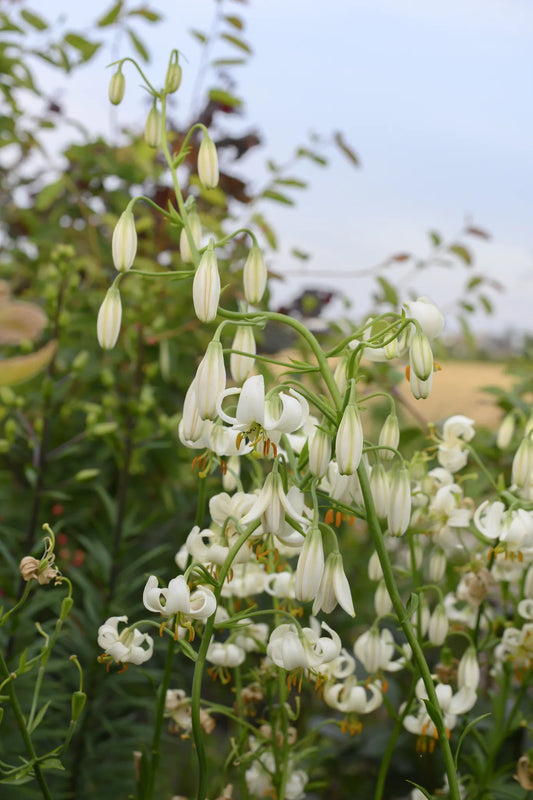

Collection: Buy your professional lily bulbs
Order your professional Lilium bulbs
Floriverse , a specialist wholesale supplier of Lilium market garden bulbs , offers you a rigorously selected range for the needs of cut flower growers. Buying your Lilium bulbs means opting for high yield, consistent professional quality and spectacular flowering. Our bulbs come from specialized nurseries, benefiting from excellent calibration and excellent disease tolerance. We offer you dedicated technical support , a responsive sales department as well as fast and careful delivery throughout France . Take advantage of our producer prices and order now to guarantee your plantings in the best conditions. Our teams support you with personalized advice adapted to your region, your schedule and your commercial outlets. Reserve your quantities now to secure your supplies.
Professional Lilium Cultivation - Complete Technical Guide
Lilium belongs to the botanical family Liliaceae and is a perennial bulbous plant whose life cycle includes an active growth phase in spring and summer followed by a winter dormancy. The genus has about 100 species native mainly to the Northern Hemisphere, extending from Europe to Asia to Japan, and North America.
Botanical Characteristics and Morphology
Lilium has a non-tunicated scaly bulb , made up of fleshy scales nested around a basal plate. The dimensions vary from 4 to 18 cm in circumference depending on the commercial size and the species. The reference sizes are 12-14 cm for Asians and 16-18 cm for oriental hybrids .
The foliage is characterized by elongated, lanceolate to linear leaves, measuring 15 to 20 cm in length. The arrangement can be alternate, whorled or spiral. The color varies from medium green to dark green with a notable shine. The foliage is mostly deciduous, present from March-April to July-September.
The flowers have a characteristic funnel shape, composed of six tepals . Individual sizes vary from 2 to 20 cm in diameter , reaching up to 30 cm in some varieties. The number of flowers per stem varies considerably, with Lilium martagon bearing up to 50 flowers on a single stem .
Height and Vegetation Port
Mature height ranges from 0.60 m to 1.50 m , with some varieties exceeding 2 m in optimal conditions. Professional references indicate: Lilium 'Oriental Le Rêve' at 60 cm, Lilium martagon up to 1.50 m, Lilium auratum up to 1.60 m, and Lilium candidum around 1.20 m. The habit is mostly upright, suitable for the production of cut flowers and for growing in clumps.
Horticultural Groups and Commercial Varieties
Asian Lilium
Reference varieties for their ease of cultivation and robustness . Abundant flowering, generally less fragrant but offering a great diversity of colors. Flagship varieties: 'Enchantement' (nasturtium red), 'Connecticut King' (yellow), 'Mont Blanc' (white). Particularly suited to perennial plantings in public green spaces.
Oriental Lilium
Known for their spectacular flowers and intense fragrance . Derived mainly from Lilium auratum and Lilium speciosum. Generally larger than Asians with large, cup-shaped flowers.
Specialized Hybrids
Oriental trumpet (OT) Lilium combines the characteristics of orientals and trumpets, offering imposing flowers and general hardiness. Lilium longiflorum is distinguished by its long white flowers. Lilium speciosum has fragrant flowers, often pink with red highlights.
Lilium candidum - Special case
The Madonna Lily is an exception with its persistent winter basal rosette and its reverse cycle with summer rest. Flowering May-July, pure white flowers in loose clusters of 3 to 10 flowers with a sweet scent. Height exceeding 1 meter, origin Lebanon, cultivated throughout France.
Planting Calendar and Techniques
Optimal Planting Periods
Planting is mainly carried out in autumn from September to November before the first frosts. In regions with harsh winters, it may be possible to shift to spring (March-April). Minimum soil temperature: 8-10°C for spring , maintained above 10°C in autumn. Exception: Lilium candidum strictly autumnal (September-October).
Depth and Spacing Technique
Depth according to root system:
- Lilies with stem roots : 15 to 20 cm deep
- Basal root lilies : 5 to 7.5 cm is sufficient
- General rule : 2 to 3 times the height of the bulb (15 cm for a 5 cm bulb)
- Exception Lilium candidum : only 3.5 cm
Professional spacing: 15 to 20 cm between bulbs . Recommended density in public beds: 7 to 10 bulbs/m² for optimal effect.
Cultural Conditions and Technical Requirements
Soil Characteristics
Open, loose, and well-drained soil, as Lilium does not tolerate stagnant water. Optimal mix: 2 parts sandy loam + 2 parts peat + 1 part sand . Ideal pH: 6.0 to 6.5 (slightly acidic to neutral). Rich in organic matter is essential. Optimal rooting temperature: 9°C .
Exposure and Light Requirements
Full sun is required with a minimum of 6 hours of direct sunlight per day for optimal flowering. Partial shade is tolerated, but may reduce flower quality and quantity. Light protection is possible in areas with very intense sunlight.
Professional Water Management
Needs modulated according to the growing cycle:
- Post-planting : low requirements, fresh soil without excess
- Active growth : high requirement, constantly moist but drained soil
- Flowering : maximum requirements, 25 to 35 mm/week
- Senescence : net reduction due to dormancy
Total requirements: 400 to 500 mm/hectare . Drip irrigation recommended, spacing 30-50 cm, flow rate 2L/h/row.
Fertilization Program
Base dressing: 60-80 N units, 80-100 P₂O₅ units, 120-150 K₂O units per hectare . Split applications during cultivation: 30-40 additional N units at the emerging shoot and early flowering stage. Calcium: 80-120 units/ha , Magnesium: 30-40 units/ha . Recommended formulations: NPK 12-12-24 rich in potassium.
Seasonal Protection and Maintenance
Mulching and Winter Protection
Organic mulch 5 to 7 cm thick applied in late autumn after the first frosts. Recommended materials: decomposed pine bark, dead leaves, straw, mature compost. Harsh winters (prolonged -10°C): 30-50 g/m² winter fleece or 10 cm mulch. Container cultivation: bubble wrap or moving to a protected area.
Routine Technical Maintenance
- Watering : slightly damp soil, never soggy, stop after foliage dries out
- Weed control : mulching to limit weeds, reducing nutrient competition
- Removing faded flowers : cut flowers only, keep stem and leaves
- Foliage pruning : never cut green foliage, wait for natural autumn yellowing
- Possible lifting : sensitive varieties, storage 10-15°C after complete yellowing
Parasites and Diseases - Health Management
Main Fungal Diseases
Botrytis elliptica (lily blight): wet brown spots on leaves, possible complete defoliation. 50 to 100% destruction of the aerial part without treatment. Prevention: plant spacing, air circulation, approved fungicides, crop rotation.
Fusarium oxysporum f. sp. lilii : bulb rot, yellowing, leaf stunting, plant mortality. Prevention: healthy bulbs, soil disinfection, avoidance of excessive moisture.
Rhizoctonia solani : root rot, symptoms similar to fusarium wilt, root and crown attack.
Specific Pests
Lily leaf beetle (Lilioceris lilii) : red beetle, larvae and adults completely defoliate plants. A female lays up to 450 eggs/season , 80% of plants attacked without intervention. Intensive monitoring from mid-April to July, specific insecticides required.
Aphids : viral transmission, weakening of plants. Biological control (ladybugs) or selective insecticides.
Cultural Rotation
Avoid planting flower bulbs on plots that have hosted Lilium for at least 5 years . Rotation is particularly important for crops grown from seed (cycle 2 to 6 years until flowering).
Vernalization and Forced Cultivation
Vernalization Requirements
Vernalization is mandatory for Lilium longiflorum in particular. Exposure 2°C to 10°C , optimal effectiveness at 4°C . Minimum duration 6 weeks for saturation effect. Non-vernalized bulbs: foliage production only without flowering. Professional protocol: storage 4°C for 6 to 9 weeks before planting.
Growing in Pots and Under Cover
Optimal substrate: 60-70% blond peat or coconut fiber + 20-30% perlite or coarse sand + 10% mature compost . Substrate pH: 6.0 to 6.8 . Planting depth: 10 to 15 cm, substrate for bulb 5 cm. 30 cm diameter pot: 5 to 6 bulbs spaced 4-5 cm apart .
Rooting temperature: 5°C for 2-3 weeks , then growth 15-18°C . Watering: fresh substrate, never soggy, approximately weekly depending on drying out, top 5 cm.
Off-Season Forcing
Technical conditions: 15°C to 20°C , bulb to flower duration 8 to 12 weeks . Crucial preliminary vernalization: 6 to 8 weeks at 2-5°C . Additional lighting possible in low light.
Performance and Commercial Performance
Professional Performance
Average expected yield: 9 commercial flower stems/m² based on optimal density of 9 bulbs/m². Intensive conditions: 10 to 12 stems/m² possible. Each bulb generally produces one commercial flower stem.
Influence of Caliber
Large sizes (>16 cm): vigorous stems, abundant flowering, large flowers from the first year. Medium sizes (14-16 cm): good results. Small sizes (<12 cm): additional season necessary for optimal flowering. Professional production: prefer large sizes for maximized yield and quality.
Division and Renewal
Division every 3 to 4 years to maintain vigor and stimulate flowering. Optimal period: late summer-early autumn when the leaves turn yellow. Average lifespan of Asian varieties: 3 to 5 years without division .
Flowering Calendar and Staggering
Main period: June to August for most varieties. Possible extension May-June to September depending on species and conditions. Sequential flowering on the stem naturally prolongs the ornamental period.
- Asian Lilium : 2-3 weeks June-July
- Oriental Lilium : 3-4 weeks July-August
- Specialized hybrids : up to 6 weeks
- Lilium candidum : May to July
Landscaping and Development Applications
Professional Integration
Adds height and structure to flowerbeds, visual focal points. Borders: thin stems, low ground cover, layered effect with smaller flowers. Lilium martagon: thrives in light shade, perennial beds in less sunny areas. Compact varieties: grow in pots, containers, terraces, and small urban spaces.
Relevance Communities
Asiatic lilies: robust, easy to grow , ideal for public perennial plantings. Reduced annual replacement rate, optimized landscaping budgets. Lifespan: 3 to 5 years without division , density 7 to 10 bulbs/m² , depth 10-15 cm.
Water consumption: 40% lower than traditional annual water consumption after establishment. Annual maintenance cost: €2.5/m² compared to €5-8/m² for traditional annual water consumption.
Botanical Associations
Aesthetic effects: hostas, perennial geraniums, ferns (textural contrast), astilbes, heucheras, foxgloves (partial shade), ornamental grasses (lightness, movement).
Cultural benefits: Iridaceae (iris), Amaryllidaceae (ornamental garlic, daffodils) - similar requirements. Alliums: pest repellent properties, limitation of aphids, mites. Spacing: 20-30 cm between lily bulbs , 30-40 cm with companion perennials .
Ecological Benefits and Biodiversity
Active contribution to biodiversity by attracting diverse pollinators. Trumpet lily: pollination of moths, hawk moths adapted to the length of the floral tube. Fragrant open flower species (Lilium candidum): bees, bumblebees, beetles.
Lilium martagon: Visits bees, diurnal butterflies. Significant nectar and pollen production. Tiger lilium: up to 30 flowers/stem , numerous visiting opportunities. Attraction period: June to September depending on species and cultivars.
Hardiness and Climate Adaptability
General hardiness: -20°C to -25°C (USDA zones 5-6) for horticultural varieties. Hardy species (Lilium martagon, lancifolium): -30°C (USDA zone 4). Metropolitan France: USDA zones 6-8 (-23°C to -6.7°C), suitable for most French regions.
Perennial plant: several years in the same location under favorable conditions. Average lifespan in Asia: 3 to 5 years without division .
To summarize: Our Lilium bulbs
As a specialist wholesale supplier of Lilium bulbs , Floriverse is committed to providing professional floriculturists with horticultural quality bulbs, suitable for intensive cut flower production. Lilium is a prime bulbous plant for its wide range of colors, varied shapes and spectacular flowering from June to August. Thanks to our rigorous selection, we guarantee professional sizes, such as 14-16 cm bulbs for Asians or 16-18 cm for Orientals, allowing an optimal yield of up to 12 commercial flower stems per m².
Buying Lilium bulbs from Floriverse means benefiting from personalized support, from the variety to the growing schedule. Our products are sourced from specialized nurseries and selected for their vigor, natural resistance, and flowering stability. Whether you're growing in the ground or in containers, we offer reliable varieties like 'Mont Blanc', 'Connecticut King', and 'Le Rêve', perfectly suited to the French market.
With Floriverse, a specialist wholesale supplier of Lilium bulbs , you benefit from volume-based discounts, strict traceability, and responsive customer service. Buying Lilium bulbs from our network also means accessing efficient logistics to secure your planting periods (fall or spring). Our team remains available to offer you personalized advice based on your growing conditions.
Whether you are a producer for short circuits, communities or the export market, buying Lilium bulbs from a specialist Lilium bulb wholesale supplier like Floriverse guarantees you quality, consistency and profitability.
-
-
Wholesale Flower Bulbs Online
We work with dozens of producers to offer you the best prices for your flower bulbs.
-
Quality Bulbs
Our producers are selected for their reliability and the quality of their bulbs.
-
Your bulbs at the best prices
We work every year with your partner producers to offer you the best prices